
Headwaters
A Sneak Peek at a work-in-progress

This week I’m sharing a short opening from a nonfiction piece I’ve been developing as part of a new memoir about living a mindful outdoor life. Hope you enjoy:
Headwaters
A poem and a creek are derived from the same source‒the hidden world. Neither can be readily explained because, in a sense, each comes from underground. There is no argument that makes coursing water any more necessary or innate than it already is. Similarly, a line of poetry doesn’t smack the heart only after we’ve been taught schemes of sound and rhetoric. Substance and essence don’t work that way. A poem simply arrives, always happens in the present tense. Its parting lesson is to remind us of the importance of paying attention. It’s there, in the looking back, in the memory of delight, where we find our most important clues. Where we get down to the hard business of learning how to live.
Few things excite me more than a body of moving freshwater. Streams reflect all the circulations of active life, large and small. What stirs the blood is made of the same stuff that tugs at the stars. Gravity pulls on everything, carving shapes that hold together in a way that helps us comprehend them. The pleasing and perfect beauty of spheres is accomplished through a pattern of continual, invisible movement. Think of river rocks. Think of the moon.
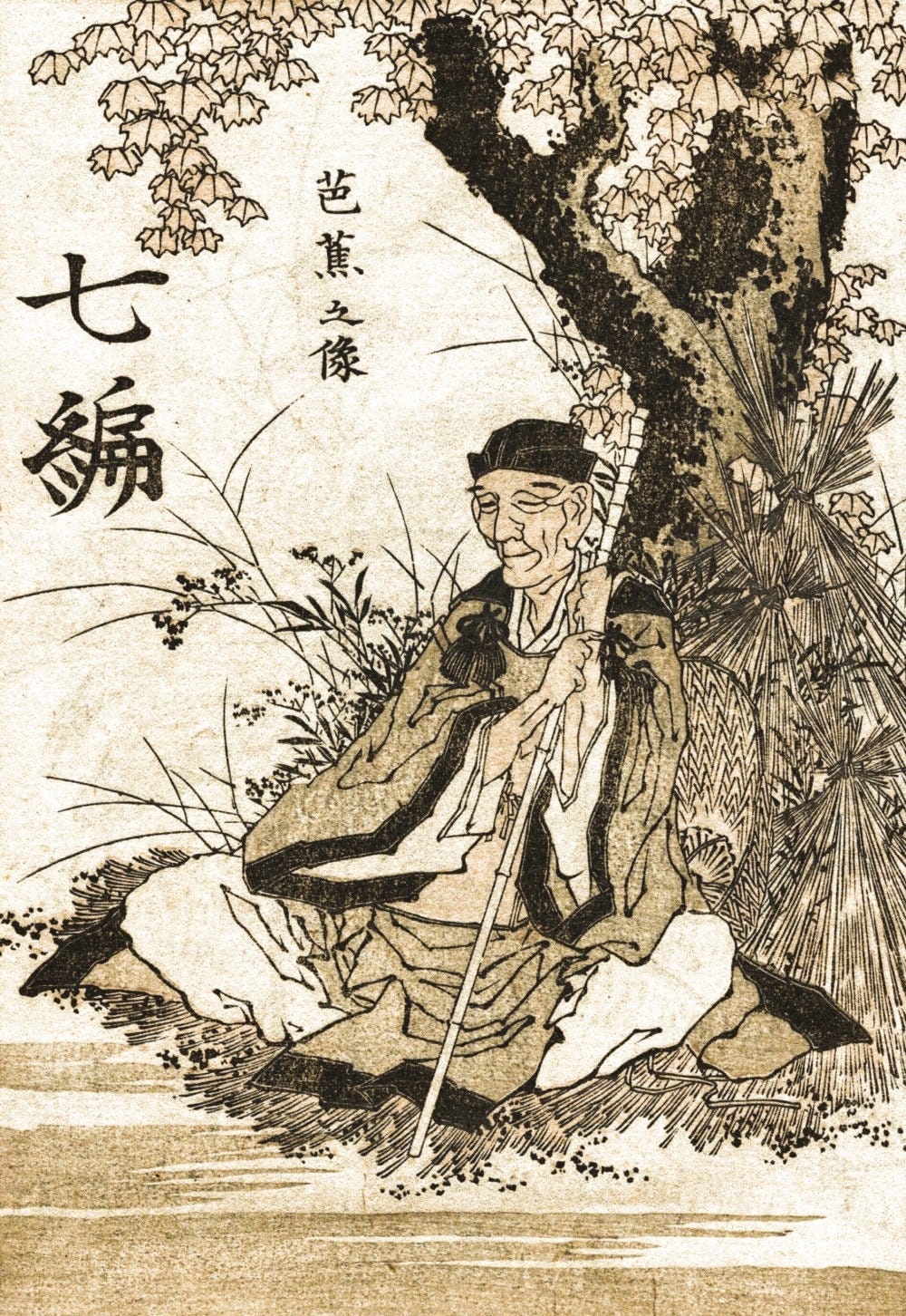
Two contrary things can be true at the same time. These are my two things. I am never more alive than when I am alone in the woods. And I am never more myself than when I exist within a world made purely of language.
It’s not an unusual condition. The outer and inner wilderness is at the heart of American literature, broadly speaking. Walt Whitman presented his life’s work, Leaves of Grass, as an extended metaphor for the duality of the woods and the word. The reason he was able to so blithely proclaim that he had no qualms about contradicting himself, was because at a more profound level, he saw no contradiction. Nature was beyond humankind’s knowledge of it, so why should a thinking person ever limit themselves to what was merely known?
Poetry too depends little on what we know about it. That isn’t to say that I think a literature teacher’s lesson is without value. But the initial effect of a poem, the inward cutting thrust that it can make as it enters the reader’s mind, is not in want of an attorney. Like the punchline of a joke or the deception of a magic trick, once the artistic twist is explained, a certain mystery is lost. And that, of course, is because everything precious corrodes once it is exposed to the air. As another great American poet cautioned, nothing gold can stay.
But sometimes I wonder if that’s really true. Or if it is true, is it possible that Robert Frost exaggerated his case? While we might not be able to unlearn a lesson, we likewise cannot unsee a revelation or unfeel a skipped heartbeat. The electric moment still occurred, regardless of how well we can understand it. In this vein, we experience poetry, just as surely as we experience love. Anyone who tries to justify a passion, whether it’s for country, cause or person, realizes how difficult it can be. We love because we can and must, not because we should. And surely that love doesn’t disappear when we are told it’s the product of social bonds, pheromones, or accidents of neurochemistry. Surely we know that those facts belie a deeper truth.
the comparison between a creek and a poem made sense straight away... but by the end i was thinking they're alike for another reason too. neither can really be borrowed from someone else's experience. u have to meet both yourself ◕‿◕
Think of river rocks and the moon indeed.
I really enjoyed this. Has my brain firing off in many different directions, from the difference to how nature is used in American and Canadian literature (tends to be more adversarial in Canada), Raymond Carver's poem "Where Water Comes Together With Other Water", and Toni Morrison's thoughts on love.